Krisis Plastik di Lautan: 14 Juta Ton Mikroplastik di Dasar Samudra
Investigasi komprehensif tentang krisis mikroplastik di dasar samudra dan dampak katastrofik terhadap ekosistem laut dan kesehatan manusia.
Tim Redaksi
Jurnalis
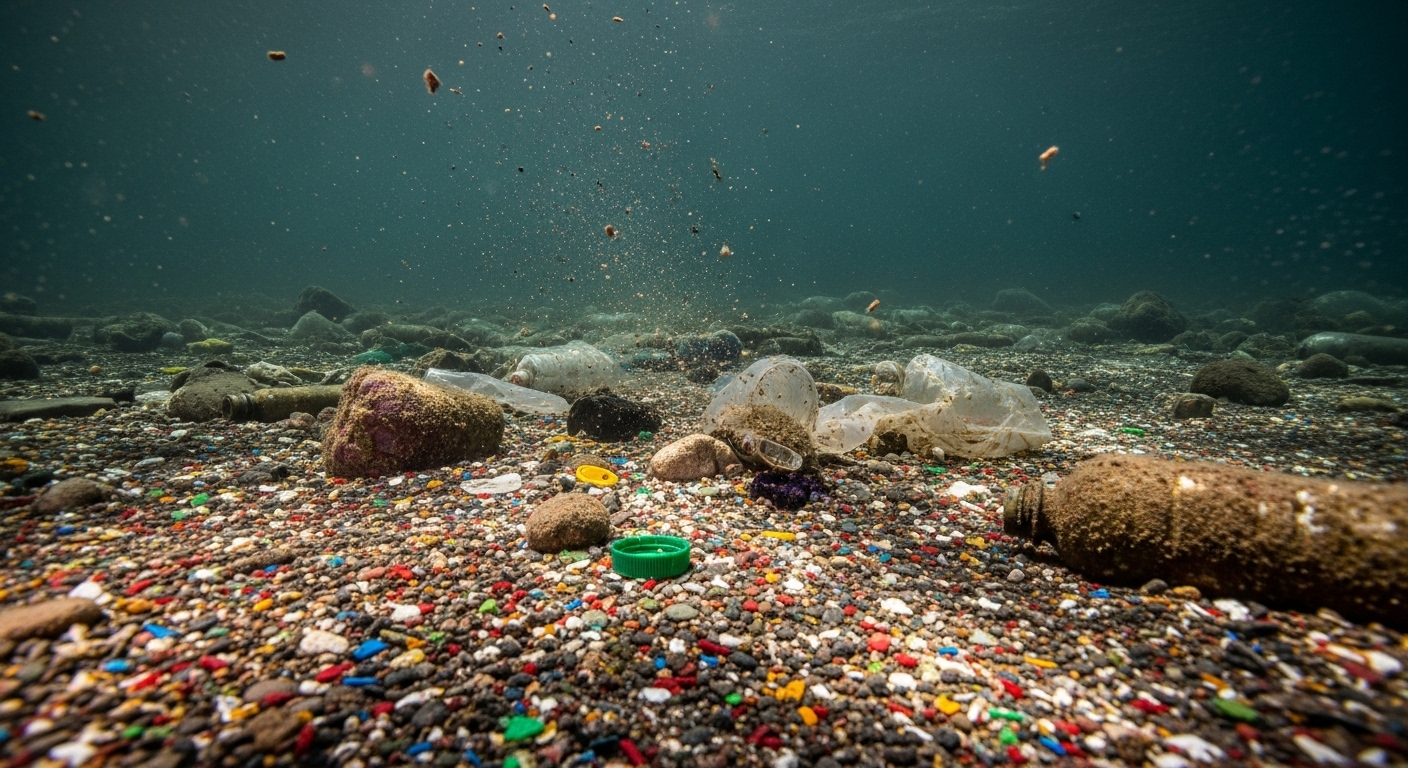
Penelitian groundbreaking yang dipublikasikan dalam jurnal Marine Pollution Bulletin mengungkapkan realitas mengerikan: sedimen dasar laut mengandung sekitar 14 juta ton mikroplastik—30 kali lebih banyak dari jumlah plastik yang mengapung di permukaan. Temuan ini mengubah pemahaman kita tentang skala krisis polusi plastik global.
Anatomi Krisis Mikroplastik
Apa Itu Mikroplastik?
Mikroplastik adalah partikel plastik berukuran kurang dari 5mm yang berasal dari:
Fragmentasi Plastik Besar - 80% dari total mikroplastik
- Botol plastik yang terdegradasi oleh UV dan gelombang
- Kantong plastik yang terurai menjadi partikel kecil
- Peralatan memancing yang terbuang
Sumber Primer - 20%
- Microbeads dalam produk kosmetik dan pasta gigi
- Serat sintetis dari pencucian pakaian (700.000 serat per siklus cuci)
- Pellet nurdle dari industri plastik
- Ban kendaraan yang aus (28% dari mikroplastik di laut)
Jalur Menuju Dasar Laut
The Journey Down:
- Mikroplastik turun ke dasar laut dengan kecepatan 16-500 meter per hari
- Terakumulasi di deep-sea sediments pada kedalaman 6-11 km
- Konsentrasi tertinggi: 1.9 juta pieces per meter persegi di beberapa lokasi
- Persistent selama ratusan hingga ribuan tahun
Geographic Distribution:
- Mediterranean Sea - Konsentrasi tertinggi (1.9 juta pieces/m²)
- Pacific Ocean - Great Pacific Garbage Patch (1.8 trillion pieces)
- Arctic Ocean - 12.000 particles per liter (higher than anywhere)
- Indian Ocean - Rapidly accumulating hotspot
Dampak pada Ekosistem Laut
1. Disruption pada Food Chain
Bottom-Feeders Terancam:
- Sea cucumbers ingesting mikroplastik hingga 130 pieces per individual
- Deep-sea amphipods mengandung plastik di 72% specimens
- Plastic-to-prey ratio di beberapa area mencapai 1:1
Bioaccumulation Effect: Mikroplastik bergerak naik melalui rantai makanan:
- Zooplankton (base level) → 50% contamination
- Small fish → 78% contamination
- Mid-size predators → 85% contamination
- Top predators (tuna, sharks) → 92% contamination
- Humans → Unknown full extent, tapi detected dalam darah dan plasenta
2. Chemical Contamination
Plastik bertindak sebagai “sponge” untuk:
- Persistent Organic Pollutants (POPs) - DDT, PCBs
- Heavy Metals - Mercury, lead, cadmium
- Endocrine Disruptors - BPA, phthalates
- Pharmaceutical Residues
Toxic Cocktail: Konsentrasi polutan bisa 1 juta kali lebih tinggi pada permukaan plastik dibanding air sekitar.
3. Physical Damage
Ingestion Impact:
- 100% sea turtles memiliki plastik di sistem pencernaan
- 59% whale species terkena dampak
- 36% seabird species regularly consume plastic
- Blocking digestive systems → starvation despite full stomach
Entanglement Crisis:
- 700 marine species terdokumentasi terjerat dalam debris plastik
- 300.000 cetaceans (dolphins, whales) mati per tahun
- 100.000 marine mammals dan 1 juta seabirds annually
4. Coral Reef Degradation
Plastic-Coral Interaction:
- Coral disease meningkat 89% saat kontak dengan plastik
- Plastic debris blocks sunlight → reduces photosynthesis 30%
- Toxic leachate → coral bleaching
- Physical abrasion → tissue damage dan infeksi
Dampak pada Kesehatan Manusia
Direct Exposure Routes
1. Seafood Consumption Rata-rata orang mengkonsumsi:
- 50.000 partikel mikroplastik per tahun melalui makanan
- 5 gram plastik per minggu (setara dengan 1 kartu kredit)
- 250 gram per tahun (hampir 0.5 lb)
High-Risk Foods:
- Shellfish (mussels, oysters) - 300 particles per 100g serving
- Commercial fish - 4.3 particles per fish
- Salt - 600 particles per kilogram
- Bottled water - 325 particles per liter
- Tap water - 5.45 particles per liter
2. Air Inhalation
- 20 mikroplastik particles per cubic meter udara indoor
- Sea spray membawa mikroplastik ke coastal communities
- Highest concentrations di urban areas
3. Drinking Water
- 83% global tap water samples mengandung mikroplastik
- Well water di rural areas juga contaminated
- Bottled water bukan solusi (lebih contaminated)
Health Implications
Confirmed Effects:
- Inflammation - Chronic inflammatory responses
- Oxidative Stress - Cell damage dan accelerated aging
- Gut Microbiome Disruption - 43% reduction dalam microbial diversity
- Immune System Compromise - Reduced antibody response
Suspected Links (Under Research):
- Reproductive issues - Declining sperm counts (50% reduction in 40 years)
- Developmental problems in children
- Increased cancer risk - Particularly colon dan breast cancer
- Neurological disorders - Crossing blood-brain barrier
- Metabolic syndrome - Obesity, diabetes connection
Chemical Exposure: Additives dalam plastik (phthalates, BPA, flame retardants):
- Endocrine disruption → hormone imbalances
- Reproductive toxicity → fertility problems
- Carcinogenic potential → tumor formation
- Developmental toxicity → birth defects
Economic Costs
Quantifying the Damage
Marine Economy Losses:
Fishing Industry - $13 billion annual loss
- Reduced fish stocks dan contamination
- Damaged fishing gear
- Processing costs untuk contaminated catch
Tourism - $40 billion loss
- Beach closures dan cleanup costs
- Decline dalam coastal tourism
- Reputational damage
Shipping - $1.3 billion
- Vessel damage dari debris
- Propeller entanglement
- Port cleanup operations
Healthcare Costs:
- Projected $250 billion annually by 2030
- Chronic disease management
- Reproductive health treatments
- Cancer treatments linked to chemical exposure
Cleanup Costs:
- Ocean cleanup technologies - $20+ billion investment needed
- Beach and coastal cleaning - $500 million annually
- Wastewater treatment upgrades - $180 billion globally
Sources of Ocean Plastic
Geographic Contributors
Top Polluting Countries (Million Tons/Year):
- China - 3.5 million tons
- Indonesia - 1.29 million tons
- Philippines - 0.75 million tons
- Vietnam - 0.73 million tons
- Sri Lanka - 0.64 million tons
- Egypt - 0.51 million tons
- Thailand - 0.41 million tons
- Malaysia - 0.37 million tons
- Nigeria - 0.34 million tons
- Bangladesh - 0.31 million tons
Note: High-income countries juga kontributor signifikan melalui exports sampah plastik ke developing countries.
Industry Breakdown
Major Contributors:
- Packaging - 36% of plastic production
- Textiles - 14% (synthetic clothing)
- Consumer Products - 12%
- Construction - 16%
- Automotive - 7%
- Electronic - 4%
- Other - 11%
River Pathways
10 Rivers Contribute 90% of Ocean Plastic:
- Yangtze (China) - 333.000 tons/year
- Indus (Pakistan/India) - 164.000 tons/year
- Yellow River (China) - 124.000 tons/year
- Hai River (China) - 91.000 tons/year
- Nile (Africa) - 85.000 tons/year
- Ganges (India/Bangladesh) - 83.000 tons/year
- Pearl River (China) - 53.000 tons/year
- Amur (Russia/China) - 38.000 tons/year
- Niger (Africa) - 35.000 tons/year
- Mekong (Southeast Asia) - 33.000 tons/year
Current Solutions dan Technologies
1. Prevention Strategies
Reduce Single-Use Plastic:
Bans dan Regulations
- 67 countries telah implemented plastic bag bans
- EU Single-Use Plastics Directive (2021)
- 127 countries dengan some form of regulation
Extended Producer Responsibility (EPR)
- Manufacturers bertanggung jawab untuk end-of-life management
- Incentivizes design for recyclability
- Generates funding untuk waste management infrastructure
Alternative Materials:
Bioplastics - PLA, PHA dari renewable resources
- Challenges: Masih require industrial composting
- Cost: 20-50% more expensive
- Performance: Limited untuk certain applications
Paper-Based Alternatives
- Deforestation concerns if not sustainable
- Water usage issues
- Limited durability untuk wet applications
Reusable Systems
- Container deposit schemes
- Refill stations
- Business model innovation (circular economy)
2. Cleanup Technologies
Ocean Surface Cleaning:
The Ocean Cleanup Project:
- Passive collection systems dalam ocean gyres
- Claimed removal: 10 million kg plastik by 2025
- Controversy: Marine life bycatch concerns
- Cost: $150 million investment
Interceptor Systems:
- River-based barriers sebelum plastik mencapai laut
- Automated collection dan removal
- 4 systems operational di Indonesia, Malaysia, Vietnam, Dominican Republic
- Target: 1000 rivers by 2025
Mr. Trash Wheel (Baltimore):
- Solar/hydro-powered water wheel
- Collected 1,400 tons of trash since 2014
- Model replicated di cities worldwide
Deep-Sea Solutions:
- Currently NO viable technology untuk deep-sea microplastic removal
- Focus must be on preventing further accumulation
3. Wastewater Treatment Upgrades
Advanced Filtration:
- Membrane bioreactor (MBR) technology
- Captures 99.9% of mikroplastik dari wastewater
- Cost: $50-100 million per treatment plant upgrade
- Challenge: 90% of wastewater di developing countries untreated
Nature-Based Solutions:
- Constructed wetlands sebagai tertiary treatment
- Mussel beds sebagai bio-filters
- Removes 70-90% of mikroplastik
- Co-benefits: Habitat creation, carbon sequestration
4. Innovation dalam Material Science
Promising Developments:
Self-Degrading Plastics:
- Enzyme-embedded polymers yang break down dalam specific conditions
- Challenge: Ensuring complete degradation tanpa toxic residues
- Timeline: 5-10 years to commercialization
Microplastic Capture:
- Washing machine filters (Cora Ball, Guppyfriend)
- Reduces serat release by 50-86%
- Cost: $30-40 per unit
- Challenge: Disposal of captured microplastics
Advanced Recycling:
- Chemical recycling untuk mixed dan contaminated plastics
- Breaks down polymer ke molecular level
- Can create virgin-quality material
- Currently 3-5x more expensive than virgin production
Policy dan Governance
International Frameworks
UN Environment Assembly Resolution:
- Mandate untuk legally binding treaty on plastic pollution
- Negotiations ongoing (target: 2024)
- Could be most significant environmental agreement since Paris Climate Accord
Regional Initiatives:
European Union:
- Single-Use Plastics Directive - Ban pada 10 single-use items
- Circular Economy Action Plan - 55% plastic packaging recycled by 2030
- Plastic Levies - €0.80 per kg non-recycled plastic packaging
G20 Osaka Blue Ocean Vision:
- Target: Reduce additional marine plastic to zero by 2050
- Investment framework untuk developing countries
- Technology transfer mechanisms
National Actions
Successful Models:
Rwanda:
- Total ban on non-biodegradable plastic bags since 2008
- Prison sentences untuk violation
- Result: One of cleanest countries di Africa
Kenya:
- Strictest plastic bag ban globally (2017)
- Fines up to $38,000 or 4 years imprisonment
- 80% reduction dalam plastic bag usage
Canada:
- Ban on 6 categories of single-use plastics (2021)
- Producer responsibility requirements
- Investment dalam alternatives dan recycling infrastructure
Corporate Commitments
Major Pledges:
The New Plastics Economy Global Commitment (2018):
- 500+ organizations signed
- Commitments:
- Eliminate unnecessary plastic packaging
- 100% reusable, recyclable, atau compostable by 2025
- 25% recycled content di packaging
- Progress: Mixed - Some leaders, many laggards
Ellen MacArthur Foundation Signatories:
- Unilever, P&G, Coca-Cola, PepsiCo, Nestle
- Investment: $60+ billion dalam circular economy initiatives
- Challenge: Greenwashing concerns, lack of accountability
Individual Action Guide
High-Impact Changes
1. Eliminate Single-Use Plastics (90% Impact)
- Reusable shopping bags (saves 300 bags/person/year)
- Refillable water bottle (saves 150 bottles/person/year)
- Reusable coffee cup (saves 200 cups/person/year)
- Beeswax wraps instead of plastic wrap
- Solid shampoo bars (eliminates 3-4 bottles/year)
2. Choose Sustainable Products
- Natural fiber clothing (cotton, wool, linen) over synthetics
- Washing bags untuk synthetic garments (Guppyfriend)
- Biodegradable alternatives when available
- Support brands dengan strong sustainability commitments
3. Proper Waste Management
- Learn local recycling rules (contamination reduces recyclability)
- Rinse containers before recycling
- Never “wishcycle” - When in doubt, throw it out
- Participate dalam beach cleanups (data valuable for research)
4. Advocacy dan Awareness
- Contact representatives untuk support plastic reduction policies
- Vote dengan your wallet - Boycott worst offenders
- Share information dalam your social networks
- Support organizations working on solutions
Calculating Your Plastic Footprint
Average Person:
- 100 kg plastic consumption per year (high-income countries)
- 40 kg menjadi waste
- 10 kg leaked ke environment
- 0.5 kg ends up dalam ocean
Reduction Targets:
- 50% reduction feasible dengan moderate lifestyle changes
- 80% reduction possible dengan committed effort
- 95% reduction theoretical maximum (complete plastic avoidance nearly impossible)
Future Scenarios
Business-as-Usual (BAU)
If current trends continue:
2050 Projections:
- 1 billion tons of plastic dalam oceans (more than fish by weight)
- 99% of seabirds akan have ingested plastic
- 50% of coral reefs completely degraded
- $100+ billion annual economic losses
- Unpredictable tipping points dalam marine ecosystems
Optimistic Scenario
With aggressive action:
Achievable by 2040:
- 80% reduction dalam ocean plastic input
- Stabilization of existing pollution (natural degradation begins)
- Restoration of critical marine habitats
- Circular economy fully implemented
- Elimination of unnecessary plastics
Required Actions:
- $30 billion annual investment (0.03% of global GDP)
- Universal waste collection dan recycling infrastructure
- Binding international treaty enforcement
- Massive public awareness dan behavior change
- Technology innovation dan deployment
The Path Forward
Scientific Research Needs
Critical Questions:
- Long-term health effects of chronic microplastic exposure
- Ecosystem tipping points dan resilience thresholds
- Most effective removal technologies untuk different environments
- Fate dan transformation of nano-plastics
- Interactions antara microplastics dan other pollutants
Funding Gap: Current ocean plastic research funding: $150 million/year Needed: $1 billion/year untuk comprehensive understanding
Multi-Stakeholder Collaboration
Essential Partners:
- Governments - Regulation, enforcement, infrastructure investment
- Industry - Design innovation, material substitution, circularity
- Scientists - Monitoring, research, solution development
- NGOs - Advocacy, awareness, cleanup operations
- Financial Institutions - Green financing, divestment dari polluters
- Citizens - Behavior change, political pressure, marketplace choices
Timeline untuk Action
Immediate (2025-2027):
- Implement bans pada worst single-use plastics globally
- Establish comprehensive monitoring systems
- Scale up proven cleanup technologies
- Launch massive public awareness campaigns
Near-Term (2027-2030):
- Deploy advanced wastewater treatment worldwide
- Achieve 50% reduction dalam plastic consumption
- Establish circular economy infrastructure
- Develop dan commercialize sustainable alternatives
Long-Term (2030-2050):
- Near-zero plastic leakage ke environment
- Begin ecosystem restoration processes
- Full transition ke circular material flows
- Continued monitoring dan adaptive management
A Call untuk Urgent Action
Krisis mikroplastik di dasar laut merepresentasikan salah satu environmental challenges paling mendesak di era kita. Dengan 14 juta ton mikroplastik telah terakumulasi di sedimen laut—suatu realm yang hampir impossible untuk dibersihkan—kita menghadapi legacy pollution yang akan persist selama centuries.
The Stakes:
- Marine ecosystem collapse threatens 3 billion orang yang depend pada seafood
- Economic losses mounting ke ratusan miliar dollar annually
- Human health impacts yang belum fully understood tapi potentially catastrophic
- Tipping points yang could be irreversible once crossed
The Opportunity: We still have a window untuk action. Technology exists atau sedang developed. Solutions are known. What’s lacking adalah political will, coordinated action, dan sustained commitment across all levels dari society.
Your Role: Setiap orang memiliki power untuk contribute:
- Reduce personal plastic consumption 50% atau lebih
- Demand accountability dari corporations dan governments
- Support policies dan candidates yang prioritize environmental protection
- Educate others tentang urgency dari crisis ini
- Participate dalam cleanup dan restoration efforts
The Bottom Line: Samudra kita—yang cover 71% dari planet dan produce 50% dari oxygen kita breathe—sedang suffocating dalam plastic pollution. Every piece of plastic ever created masih exists dalam some form, dan majority akan eventually end up dalam ocean jika kita tidak act decisively now.
Ini bukan hanya environmental issue—ini adalah human survival issue. Future generations akan judge kita based on actions yang kita take dalam critical decade ini. Waktu untuk half-measures telah past. Waktu untuk bold, transformative action adalah NOW.
Mari kita ensure bahwa legacy kita bukan ocean floor covered dalam plastic debris, tapi rather restored marine ecosystems thriving dengan life—untuk ourselves, untuk planet, dan untuk all future generations yang akan inherit Earth dari kita.
layanan yang dijelaskan secara lengkap di sini. layanan yang dijelaskan secara lengkap di sini. layanan yang dijelaskan secara lengkap di sini. layanan yang dijelaskan secara lengkap di sini. layanan yang dijelaskan secara lengkap di sini. layanan yang dijelaskan secara lengkap di sini. layanan yang dijelaskan secara lengkap di sini. layanan yang dijelaskan secara lengkap di sini. layanan yang dijelaskan secara lengkap di sini. layanan yang dijelaskan secara lengkap di sini. layanan yang dijelaskan secara lengkap di sini
Komentar